Description
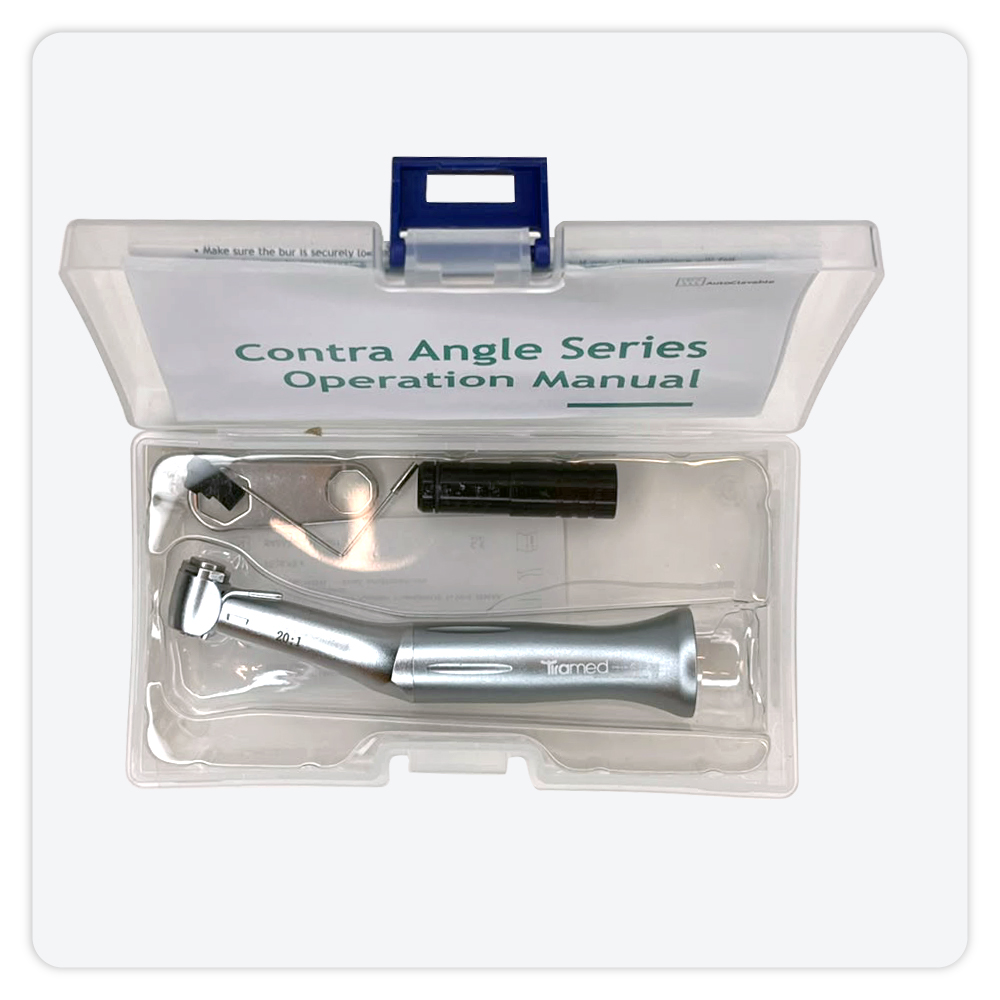
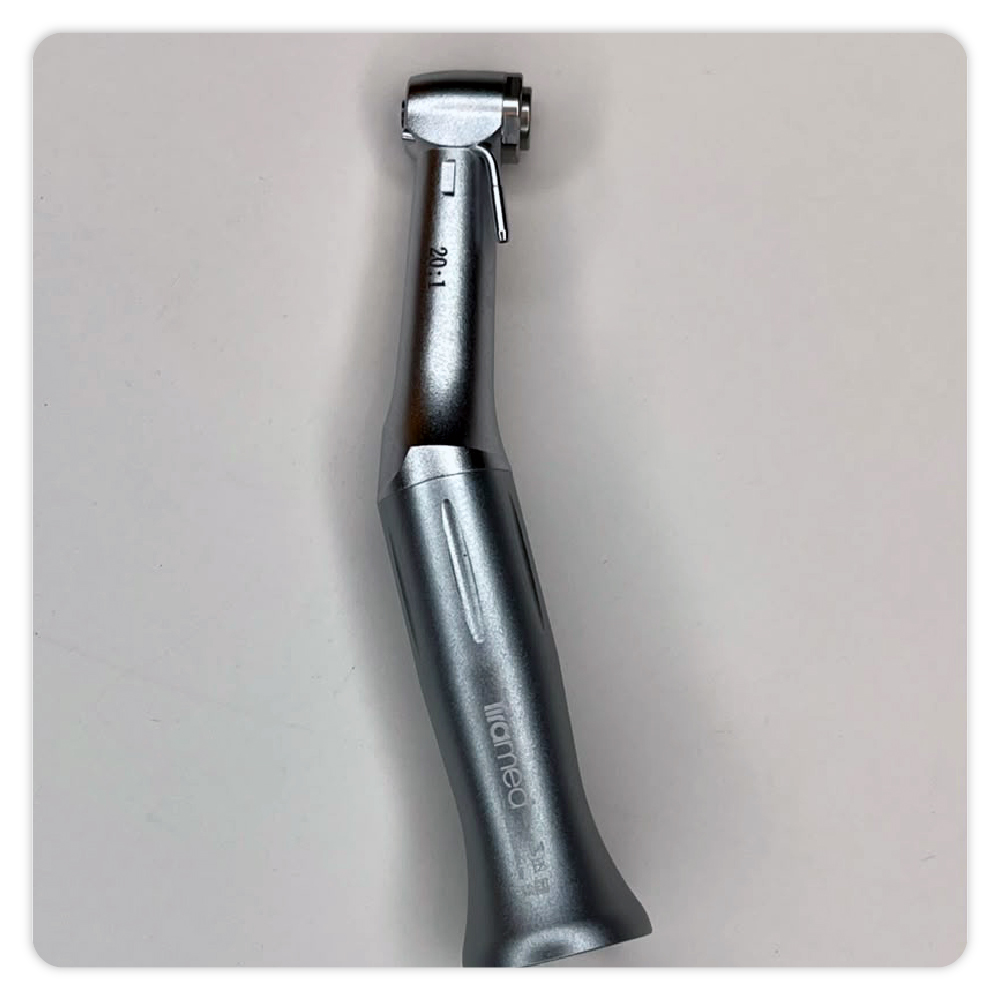
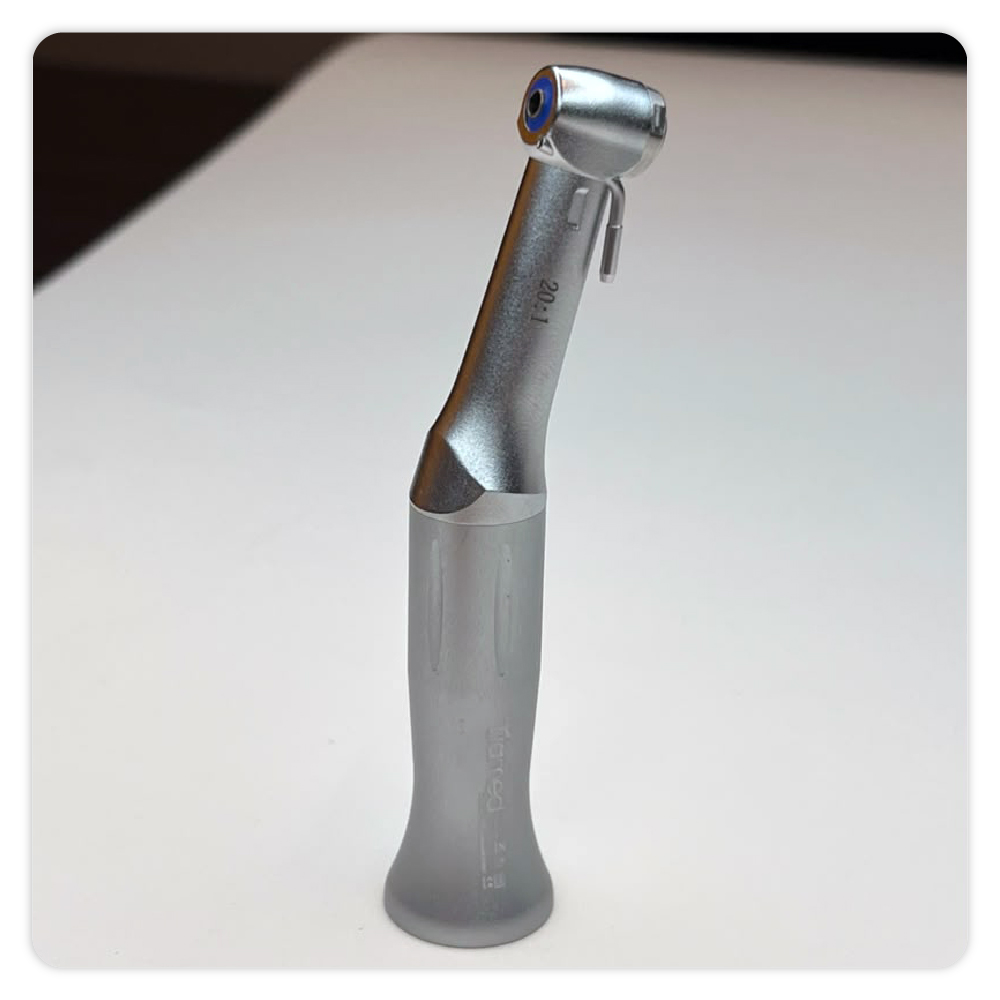
WJ Medical WJ-422J-SU-W20 Contra-Angle Handpiece
What Does a 20:1 Reduction Ratio Mean?
The defining feature of the WJ-422J-SU-W20 is its speed-reducing transmission. A 20:1 ratio means that the output instrument completes one rotation for every 20 rotations of the motor input.
For example, an input speed of 40,000 rpm produces an output speed of 2,000 rpm—the maximum speed specified for this model in the instruction manual. This mechanism allows rotational motion to be transmitted at a lower speed. Speed settings must respect the limitations of the handpiece, motor and instrument being used.
Speed reduction also increases the torque that can be transmitted. Refer to the manufacturer’s model-specific documentation for the maximum permissible torque.
Design and Features of the WJ-422J-SU-W20
Angled Handpiece for Access to the Working Area
The shape of the body, neck and head allows the instrument to be directed towards different surfaces. The way the handpiece is held and the instrument’s approach angle depend on the treatment site and the available space.
20:1 Speed-Reducing Transmission
The internal mechanism reduces the motor’s rotational speed by a fixed ratio. This feature is important when a procedure requires lower-speed rotation. Clinical applications must be selected in accordance with the manufacturer’s instructions and the requirements of the instrument attached to the head.
Compatibility with 2.35 mm Shank Instruments
The manual specifies a 2.35 mm instrument shank diameter for this model. Shank diameter alone is not sufficient to determine compatibility; the attachment design, instrument length and permissible operating speed must also meet the handpiece’s requirements.
Ensuring that the instrument is fully inserted and securely retained in the head is part of preparation before use.
No Built-In Illumination
The WJ-422J-SU-W20 does not have an internal light source. The working area must therefore be illuminated by the dental unit light or other suitable lighting equipment.
Steam-Sterilisable (Autoclavable)
The manual for this series states that the handpiece can be autoclaved at temperatures up to 135°C. Cleaning, lubrication, packaging and selection of the sterilisation cycle must follow the instructions supplied with the device.
The Handpiece’s Role in the Motor–Instrument Assembly
Handpiece performance depends on the compatibility of three components: the motor, the handpiece and the rotary instrument. The motor provides the input motion, the contra-angle determines the speed and direction of transmission, and the instrument attached to the head performs the intended task.
Before using this assembly, check motor connection compatibility, the operating speed range and the instrument’s operating requirements. A 20:1 reduction ratio alone does not determine the clinical application. Specific uses, such as implant surgery or root canal treatment, must be confirmed in the manufacturer’s documentation for this exact model.
Maintenance and Care of the WJ-422J-SU-W20
The speed-reducing contra-angle contains transmission components and instrument-retention mechanisms that require regular care. Cleaning and lubrication in accordance with the manual help maintain their performance.
The manufacturer’s instructions recommend lubrication after use and before sterilisation. Remove the rotary instrument before carrying out maintenance, and prepare the handpiece using compatible materials and equipment.
Routine care also includes inspecting the handpiece’s external condition, checking that components are correctly connected, and monitoring for unusual changes in noise, vibration or temperature. If a malfunction is detected, stop using the device and arrange a technical inspection.
For more information about the WJ Medical WJ-422J-SU-W20 contra-angle handpiece or to request a quotation, please contact Mahta Teb Sina.


Reviews
There are no reviews yet.